

Parkinson's Disease Information
Understanding Parkinson's Disease
Learn about PD, the latest research, exercise therapies, and how Drive Away Parkinsons is fighting for a cure.
What is Parkinson's Disease?
Parkinson's disease (PD) is a motor system disorder resulting from the breakdown of dopamine-producing nerve cells in the brain. The loss of dopamine causes the symptoms of PD, which include tremors, muscle rigidity, slowness of movement, impaired balance, and changes in speech.
While the disorder gets progressively worse over time, the intensity of symptoms and rate of progression varies from person to person. While PD can impact life expectancy, there are medications and therapies that can control symptoms for many years. Unfortunately, there is no known cure for PD.
Scientists are studying how the disease progresses and working to develop new drug therapies to delay, prevent, or reverse the disorder. While the precise cause of PD is unknown, genetic and environmental factors appear to play a role. However, more research is needed to uncover the causes and treatments for the disorder.

The Symbol of Parkinson's Awareness
The red tulip, with a fringe of white, became the official symbol of Parkinson's disease at the 9th World Parkinson's Disease Day Conference in Luxembourg on April 11, 2005 (although the flower had been associated with Parkinson's awareness since the early 1980s). This particular tulip was developed by J.W.S. Van der Wereld, a Dutch horticulturist who had Parkinson's disease. He named the flower after James Parkinson, the doctor who first described the disease as the "shaking palsy."
Signs & Symptoms
PD symptoms vary from person to person and progress at different rates. The most common symptoms include:
Tremors
Involuntary shaking or trembling, often starting in the hands or fingers, even at rest.
Muscle Rigidity
Stiffness in the limbs and trunk that can limit range of motion and cause pain.
Slowness of Movement
Bradykinesia — a slowing of voluntary movement that makes everyday tasks difficult.
Impaired Balance
Postural instability that increases the risk of falls as the disease progresses.
Changes in Speech
Speech may become soft, slurred, or monotone. Some people may hesitate before speaking.
Other Symptoms
Depression, sleep disturbances, cognitive changes, and loss of smell are also common non-motor symptoms.
For more information on PD and on the research underway to fight the disorder, please visit the National Institute of Neurological Disorders and Stroke website.
Medical Marijuana and Parkinson's Disease
Many people wonder about medical marijuana for Parkinson's. Research hasn't yet proven benefits or safety. And doctors don't have strong evidence to guide recommendations on what to use or how. Still, many people are interested in trying this therapy.
To learn more about people's experiences with medical marijuana, MJFF hosted an online survey through Fox Insight. Recently published results suggest that, among 1,900 participants, 70 percent reported using medical marijuana. Many of them report small benefits on sleep, anxiety and pain. But 13 percent weren't sure exactly what they were taking, and 30 percent didn't discuss with their doctor.
Critical Advance in Imaging the Living Parkinson's Brain
At the International Conference on Alzheimer's & Parkinson's Diseases (AD/PD), a research team funded by The Michael J. Fox Foundation announced important progress in the pursuit of the alpha-synuclein imaging tracer — a top research priority for the Foundation because of its potential to transform drug development.
Misfolding and clumping of the alpha-synuclein protein in brain and body cells are the pathological hallmark of Parkinson's disease. Scientists believe this toxic dysfunction gives rise to Parkinson's onset and progression. The ability to visualize alpha-synuclein activity in the living brain would be a game-changer for testing and developing potential new Parkinson's drugs.
Read the Complete Story on MJFFExercise and Parkinson's
Research shows that regular exercise can help individuals with Parkinson's manage the symptoms of their disease. The Parkinson's Outcomes Project, run by the National Parkinson Foundation, shows that people with Parkinson's who exercise a minimum of 2.5 hours a week experience a slowed decline in quality of life.
The impact of exercise was most pronounced for individuals who started exercising earlier in the course of the disease. A variety of exercises, including boxing, cycling, swimming, dancing and walking on the treadmill, can help. Physical therapists can help develop customized exercise plans to maximize effectiveness.
As always, individuals starting an exercise program should check with their doctor before they begin.

Deep Brain Stimulation (DBS)
Elizabeth's Treatment Journey
Deep Brain Stimulation (DBS) is a surgical procedure used to treat the debilitating symptoms of Parkinson's disease. DBS uses a surgically implanted, battery-operated medical device called a neurostimulator to deliver electrical stimulation to targeted areas in the brain that control movement.
The stimulation blocks the abnormal nerve signals that cause tremor and other PD symptoms. DBS does not cure Parkinson's disease, but it can significantly improve quality of life for carefully selected patients.
Elizabeth Larsen, President of Drive Away Parkinsons, underwent DBS surgery in the Fall of 2019. She has documented her journey in her book "My Journey" to help others understand what to expect.
Read Elizabeth's firsthand account of living with Parkinson's and undergoing DBS surgery in her book "My Journey."
Buy My Journey on AmazonHow DBS Works
Evaluation
Neurologists and neurosurgeons evaluate whether DBS is appropriate based on disease history, medication response, and overall health.
Surgery
Electrodes are implanted in specific brain regions. A neurostimulator device is placed under the skin near the collarbone.
Programming
After recovery, the device is programmed and adjusted to optimize symptom control with minimal side effects.
Ongoing Care
Regular follow-up appointments fine-tune the stimulation settings as the disease progresses over time.
Who is a candidate? DBS is generally considered for people with Parkinson's who have had the disease for at least four years, have motor fluctuations that are not well-controlled by medication, and do not have significant cognitive impairment.
Parkinson's & DBS Podcast
Elizabeth was asked to participate in a podcast about Parkinson's Disease and the DBS surgery she had. The podcast is part of a series called "This is Your Brain with Dr. Phil Stieg" — hosted by Neurosurgeon-in-Chief of New York-Presbyterian/Weill Cornell Medical Center, Dr. Phil Stieg, and includes Dr. Michael Kaplitt (Elizabeth's neurosurgeon) and Elizabeth herself.
MJFF Research Updates
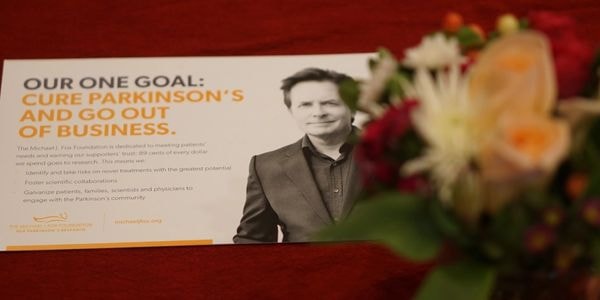
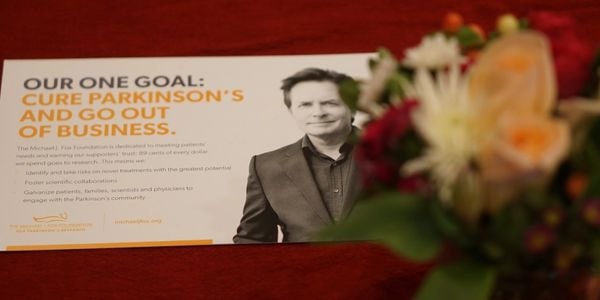
The Michael J. Fox Foundation is the world's largest nonprofit funder of Parkinson's disease research. Drive Away Parkinsons is proud to donate 100% of funds raised to MJFF.
Visit MichaelJFox.orgOther Helpful Resources
Helpful Resources
Help Us Fund the Research That Matters
Every dollar raised by Drive Away Parkinsons goes toward Parkinson's Disease research. Join us in the fight for a cure.